

Follow Us:
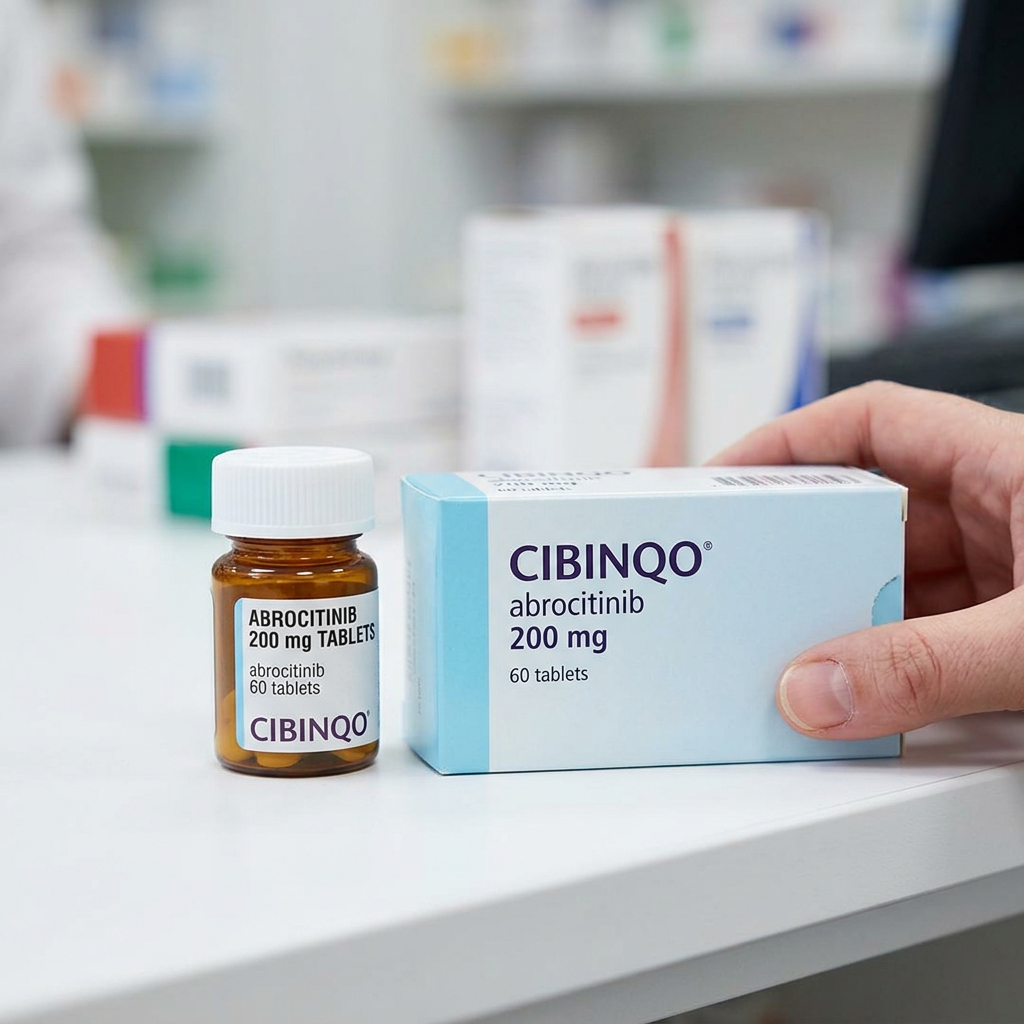
Abrocitinib

Cibinqo

Abrocitinib

Abrocitinib is an oral targeted medication used to treat moderate-to-severe atopic dermatitis (eczema) in eligible patients who require systemic therapy. It belongs to the Janus kinase 1 (JAK1) inhibitor class and works by reducing inflammatory signalling pathways involved in itching and skin inflammation. Treatment requires medical supervision because of potential risks, including serious infections, blood clots, and changes in blood cell counts and lipid levels.

Dosage Form:
Dosage Strength:
CAS No.: 1622902-68-4
Status:
Manufacturer:
Group: Anti-rheumatic drugs
Sub Group: Disease-Modifying Antirheumatic Drugs
Class: Janus Kinase Inhibitors

Uses of Abrocitinib

Abrocitinib was historically used as a respiratory medicine for the symptomatic management of certain respiratory conditions. Its former uses included:

  • Rheumatoid arthritis: Treatment of moderate-to-severe rheumatoid arthritis in selected patients who have not responded adequately to conventional disease-modifying antirheumatic drugs.
  • Psoriatic arthritis: Management of active psoriatic arthritis in eligible patients.
  • Atopic dermatitis: Treatment of selected cases of moderate-to-severe atopic dermatitis.
  • Ulcerative colitis: Management of moderate-to-severe ulcerative colitis with certain JAK inhibitors.
  • Ankylosing spondylitis: Treatment of active ankylosing spondylitis in selected patients.
  • Myelofibrosis: Ruxolitinib and other selected JAK inhibitors are used in certain myeloproliferative disorders.
  • Polycythaemia vera: Ruxolitinib is used in selected patients who have an inadequate response or intolerance to other treatment.
  • Alopecia areata: Certain JAK inhibitors are approved for severe alopecia areata in some countries.

Contraindication of Abrocitinib

Abrocitinib was historically subject to specific precautions during administration to ensure patient safety. Its former precautions included:

  • Known hypersensitivity to the active substance or formulation ingredients.
  • Active serious infections, including untreated tuberculosis.
  • Severe hepatic impairment where the specific medicine is unsuitable.
  • Significant blood-cell abnormalities, such as severe neutropenia, lymphopenia, or anaemia, depending on the medicine.
  • Pregnancy or breastfeeding when the specific product information advises against use.
  • Patients with a history of recurrent or serious infections, thrombosis, or malignancy may require alternative treatment or careful risk assessment.

Precautions for Abrocitinib

Abrocitinib was majorly subjected to specific precautions during administration to ensure patient safety. Its former precautions included:

  • Serious infections: JAK inhibitors may increase the risk of serious infections, including tuberculosis, herpes zoster, and opportunistic infections. Screening for tuberculosis and hepatitis may be required before treatment.
  • Blood abnormalities: Regular monitoring of complete blood counts is important because some medicines may cause anaemia, neutropenia, or lymphopenia.
  • Cardiovascular risk: Certain JAK inhibitors have been associated with an increased risk of major cardiovascular events, particularly in patients with existing cardiovascular risk factors.
  • Blood clots: Monitor for symptoms of deep vein thrombosis and pulmonary embolism, especially in patients with a history of thrombosis or other risk factors.
  • Malignancy risk: Some JAK inhibitors carry warnings concerning malignancies, including lymphoma and lung cancer, particularly in higher-risk patients.
  • Liver and lipid monitoring: Liver enzymes and lipid levels may increase during treatment. Periodic laboratory monitoring may be necessary.
  • Pregnancy and breastfeeding: Safety varies by medicine. Pregnancy planning and breastfeeding should be discussed with a healthcare professional.
  • Vaccination: Live vaccines are generally avoided during treatment. Vaccination status should be reviewed before starting therapy.

Drug Interactions for Abrocitinib

Potential drug interactions were historically documented when Abrocitinib was prescribed alongside certain medications. These included:

  • Strong CYP3A4 inhibitors: Medicines such as ketoconazole and clarithromycin may increase the concentration of certain JAK inhibitors, including tofacitinib and upadacitinib.
  • CYP3A4 inducers: Rifampicin and other strong enzyme inducers may reduce the effectiveness of some JAK inhibitors.
  • Immunosuppressants: Combining JAK inhibitors with biological DMARDs, other potent immunosuppressants, or certain immunomodulators may increase the risk of serious infections.
  • Corticosteroids: Concurrent use with corticosteroids may increase immunosuppression and infection risk.
  • Anticoagulants and antiplatelet medicines: Patients receiving these medicines may require additional monitoring based on their overall bleeding and clotting risks.
  • Live vaccines: Live vaccines are generally avoided because of the possibility of vaccine-related infection during immunosuppressive treatment.
  • Other medicines affecting blood counts: Concurrent use with drugs that suppress bone marrow activity may increase the risk of haematological complications.

Frequently Asked Questions

The most frequently asked questions focus on import, export, documentations, and regulation for Abrocitinib.

The Abrocitinib is a pharmaceutical active pharmaceutical ingredient (API) used in manufacturing of Abrocitinib.

: Provides active pharmaceutical ingredients (APIs), customized production, and OEM/ODM services with research and technical cooperation across Europe, the USA, and India via Primeera Healthcare.

  • Therapeutic Goods Administration (TGA):
  • US Food and Drug Administration (USFDA):
  • European Medicines Agency (EMA):
  • African Medicines Agency (AMA):
  • National Medical Products Administration (NMPA):
  • Central Drugs Standard Control Organization (CDSCO):

Primeera Healthcare Private Limited can provide import coordination and pharmaceutical documentation assistance for Abrocitinib, subject to confirmation of its current regulatory status and eligibility for import into India.

Documentation Required for Abrocitinib Import

The import of medicines into India is regulated by the Central Drugs Standard Control Organisation (CDSCO) under the Drugs and Cosmetics Act, 1940, and the Drugs and Cosmetics Rules, 1945. The regulatory requirements depend on whether the product is an active pharmaceutical ingredient (API), a finished formulation, or an unapproved medicine intended for an individual patient's treatment.

Import Regulations and dcoumentation for Abrocitinib

  • Import Documentation Assistance:
    Support with organising commercial invoices, packing lists, manufacturer details, product specifications, certificates of analysis, and other relevant documents required for regulatory review and customs processing.

  • Regulatory Coordination:
    Assistance with identifying applicable CDSCO requirements, import authorisations, and documentation procedures, subject to the product's regulatory status and the proposed import route.
  • Shipping and Customs Coordination:
    Coordination with relevant logistics providers and customs professionals to organise shipment documentation and facilitate clearance where legally permitted.
  • Compliance Verification:
    Preliminary review of available product and shipment documentation to identify potential regulatory gaps before procurement or dispatch. Import arrangements will proceed only after the applicable permissions and restrictions have been verified.

Customs Clearance and Compliance Handling of Abrocitinib Import

Primeera Healthcare Private Limited can provide import coordination and pharmaceutical documentation assistance for Abrocitinib, subject to confirmation of its current regulatory status and eligibility for import into India.

Export Regulations and dcoumentation for Abrocitinib

The export of Abrocitinib from India is subject to applicable requirements under the Drugs and Cosmetics Act, 1940, the Drugs and Cosmetics Rules, 1945, and relevant export, customs, and destination-country regulations. Documentation requirements depend on whether the product is an active pharmaceutical ingredient (API), a finished pharmaceutical formulation, or a medicine intended for a specific market. Export eligibility and destination-country requirements must be verified before shipment.

Documentation Required for Abrocitinib Emport

  • Export Documentation Assistance:
    Assistance with organising commercial invoices, packing lists, manufacturer details, Abrocitinib specifications, certificates of analysis, and other supporting documents required for Abrocitinib export and customs processing.
  • Regulatory Coordination:
    Support in identifying applicable country specific Abrocitinib export requirements, relevant manufacturing and export authorisations, and destination-country registration or import approval requirements, subject to the Abrocitinib regulatory status.
  • Shipping and Customs Coordination:
    Coordination with logistics providers, freight forwarders, and customs professionals to organise shipping documentation, export declarations, and customs clearance procedures where legally permitted.
  • Compliance Verification:
    Preliminary review of available Abrocitinib documentation, labelling, Abrocitinib manufacturing information, and destination-market requirements to identify potential regulatory gaps before dispatch. Export arrangements will proceed only after the applicable restrictions and authorisations have been verified.

Customs Clearance and Compliance Handling of Abrocitinib Export

Primeera Healthcare Private Limited can provide pharmaceutical export documentation assistance, regulatory coordination, and shipping support for Abrocitinib, subject to confirmation of its export eligibility under applicable Indian regulations and the import requirements of the destination country.

Product Export Support

If you have any questions or need any help, contact our Support Team. We will get in touch with you within 24 hours from Monday to Friday between 9:00 and 10:00 CET.